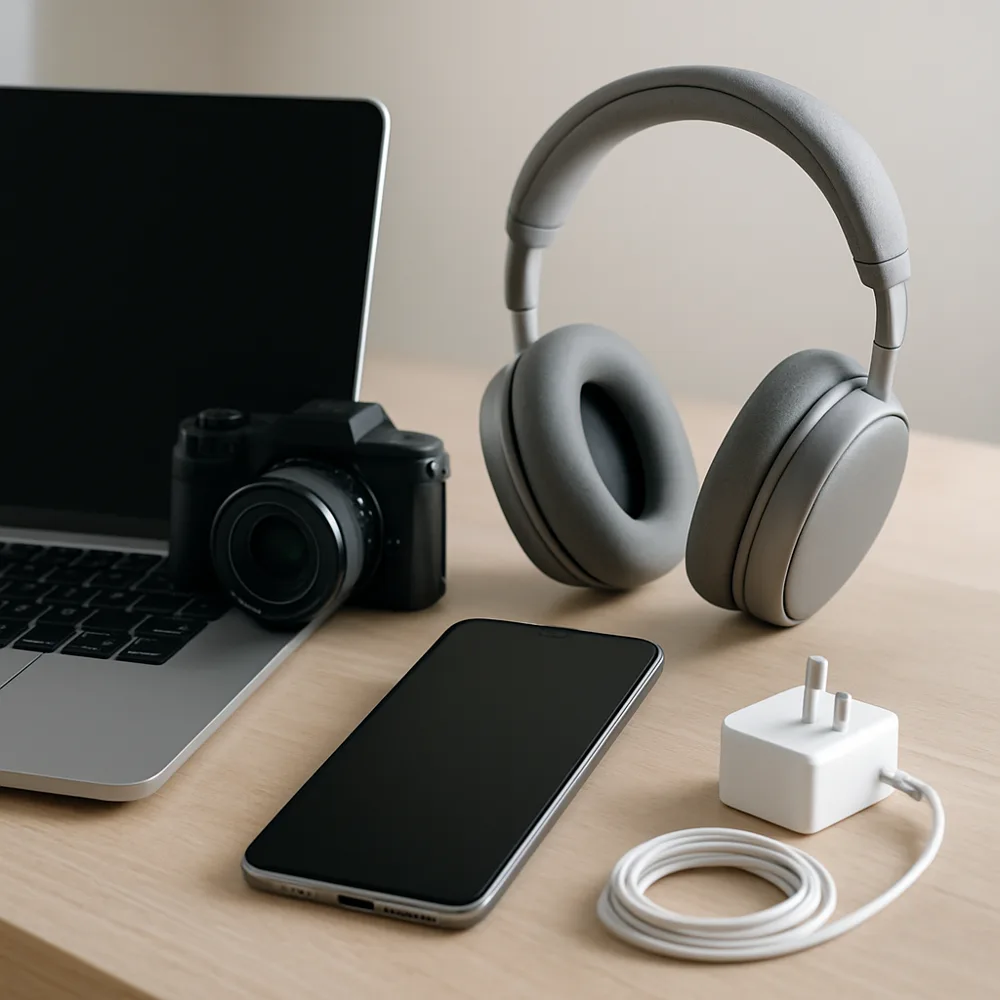
Start by deciding which devices you want to charge and how often you will be away from a wall outlet. A power bank's capacity is usually stated in milliamp-hours, but that number does not translate directly into the same amount of usable energy at a device. Conversion losses, cable quality, charging speed, and the device's own battery all affect real-world results.
Check the output ports and supported charging standards. A bank that can charge a phone may not provide enough power for a laptop, even if both use USB-C. If you plan to charge more than one device, confirm whether the available output is shared across ports. Consider size and weight as well: a larger capacity can be useful for travel, but it may be inconvenient to carry every day.
Choose a product from a reputable maker and follow its instructions for charging, storage, and use. Inspect cables and connectors for damage, and stop using a battery that is swollen, unusually hot, or visibly damaged. Keep the bank in a dry, protected place and check applicable travel guidance before flying. Recharge it periodically if it sits unused, and use a suitable charger rather than a questionable high-output accessory.